Test Demand → See Constraints → Commit With Confidence

Demand Scenario Modeling

What-if analysis that shows what you can build, and where risk lives.

  • Every demand change triggers a manual scramble

    When a forecast shifts or sales asks whether production can support a new order, most planning teams reach for the same tool: a spreadsheet. They export ERP data, flatten the BOM, reconcile supply manually, and spend hours building a model that’s disconnected from real system data by the time it’s done. The result is slow answers, false signals from flattened BOMs that bury the real constraints, and production commitments made on assumptions rather than facts.

    Some teams go further and key fake orders directly into their ERP just to test a scenario, introducing system risk and data quality problems on top of the time they’ve already lost.

    Demand Scenario Modeling (DSM) in APEX was built to replace that process entirely.
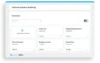
  • Demand scenario modeling dashboard for industrial Asia logistics

Improve feasibility accuracy and reduce operational risk

  • Feasibility answers your team can trust

    See which components truly block production, with multi-level BOM logic that reflects real shared constraints rather than flattened spreadsheet approximations.

  • 6-10x faster than your current process

    Replace 2-3 hour spreadsheet exercises with scenario analysis in minutes, so your team can respond to sales requests, program changes, and S&OP inputs without delays.

  • Production commitments backed by real data

    Test demand changes before committing to sales, customers, or S&OP, without altering a single ERP record. Your team walks into every conversation with scenario-based evidence, not estimates.

  • Site-level simulation built for how discrete manufacturers actually plan

    Demand Scenario Modeling in APEX enables what-if analysis to model demand changes, so teams can test scenarios directly against supply, identify true component constraints, understand build feasibility, and see where shortages emerge. The result is clearer production decisions, reduced risk, and fewer misleading signals from manual models.
  • Take a quick self-guided demo

  • Connected to your supply data. Built for manufacturing complexity.

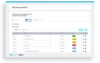
    APEX software interface for managing customer order scenarios
  • Data-connected simulation

    Scenarios run against your live inventory, supply orders, and multi-level BOM data pulled directly from your ERP. You don’t have to work with manual exports or stale snapshots of data. When your supply picture changes, your scenarios will reflect it.

    ERP-safe sandbox

    Test any demand change, pull-in, push-out, quantity modification, or new order request without altering a single production plan or system record. Nothing will alter your ERP or your APEX environment, so your team can run scenarios freely without operational risk.

    Multi-level BOM constraint logic

    Most spreadsheet simulations flatten the bill of materials (BOM), which can distort shared component constraints and surface false shortages that send planning teams chasing the wrong problems. DSM preserves multi-level BOM structure automatically, so the constraints you see are the ones that actually block production.

    Scenario comparison

    Modify quantities, shift dates, and adjust demand inputs across multiple scenarios, then compare baseline to simulation side by side before committing to anything. When inputs change, you can rerun instantly without rebuilding from scratch.

    Instant recalculation

    Adjust any input and see updated constraint and shortage visibility immediately. No waiting, re-exporting, or manual reconciliation. The results reflect your changes as soon as you make them.

  • Establish Command of Supply Planning by Being Three Steps Ahead

    APEX turns supply data and business context into optimized decisions, helping supply chain teams execute with peak intelligence, precision, and domain expertise for measurable results.

    • 18 On-time delivery improvement
    • 32 Shortage reduction
    • 14 Inventory reduction
    Learn more