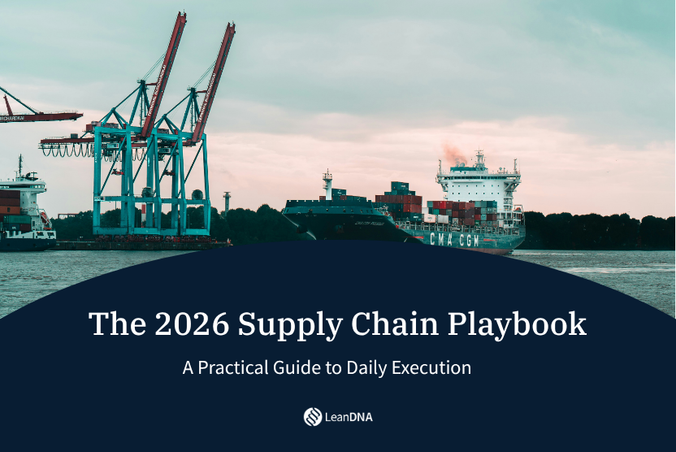
Download the full eBook here
TL;DR: The "New Normal" for Discrete Manufacturers
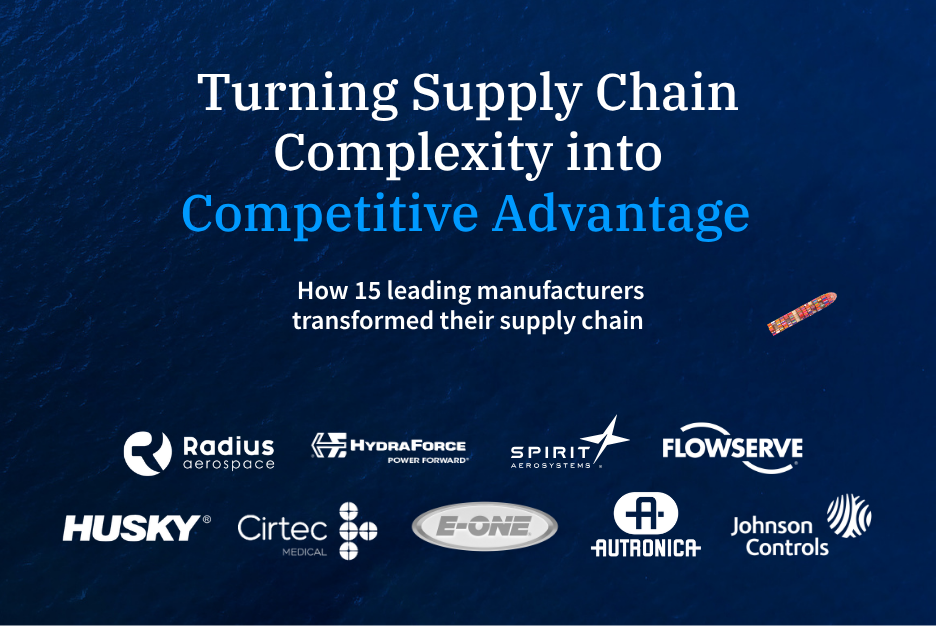
Modern manufacturing is defined by four disruptive forces: skyrocketing tariff costs, a critical talent shortage, frequent global disruptions, and AI implementation fatigue. While traditional ERPs and spreadsheets struggle to keep pace, leading manufacturers are using the APEX platform to gain real-time visibility and predictive intelligence. By shifting from reactive "firefighting" to proactive orchestration, companies like Cirtec Medical, Spirit AeroSystems, and Johnson Controls have achieved up to 20% inventory reductions and 40% fewer shortages.
The Weight of Global Volatility: Tariffs and Reshoring
Complexity is no longer an outlier; it is the baseline. Today's supply chains are more interconnected and vulnerable than ever.
The Financial Toll of Trade Headwinds
Tariffs are reshaping sourcing patterns overnight. In May 2025 alone, U.S. tariff revenues hit a record $24.2 billion, the highest since 1936. This represents a staggering $328 billion annual cost to the industry—roughly five cents of every manufacturing dollar.
On the factory floor, this manifests as:
-
Shrinking margins due to rising material costs.
-
Disrupted sourcing strategies and increased lead-time unpredictability.
-
Tied-up working capital caused by massive inventory swings.
The Strategic Posture
While 80% of COOs plan to increase onshoring or nearshoring over the next three years, only 2% have made measurable progress. Winners are those who move beyond reactive cost-cutting to a "proactive strategic posture," using trade dynamics to rethink customer demand and competitive advantage.
Solving the Talent Crunch: Efficiency as a Retention Tool
The skills gap is a present-day crisis. Estimates suggest that of the 3.8 million new manufacturing roles needed by 2033, nearly 1.9 million could remain unfilled.
Why Headcount Cannot Keep Up
When teams are understaffed, high-value analytical work is replaced by manual reporting and "investigating" priorities. This creates a "firefighting" culture that drives away top talent:
-
Burnout: Leaders spend their time triaging shortages instead of setting strategy.
-
Retention Risks: Modern professionals expect intuitive, digital-first tools. If forced to use legacy systems, frustration builds and turnover worsens.
The APEX Advantage: By automating data preparation and flagging the "next best action," APEX multiplies analyst productivity and shortens the ramp time for new hires.
From Chaos to Control: Managing Constant Disruption
Strikes, storms, and geopolitical shifts surged by 38% in 2024. For discrete manufacturers, these "exceptional" events are now part of the daily rhythm, stalling production lines and causing customer commitments to slip.
The Visibility Gap
While 60% of leaders have visibility into tier-one suppliers, only 25% of boards regularly discuss supply chain risk. Resilient manufacturers close this gap by using real-time data signals to prevent disruptions before they spread.
Case Study: Modine
Modine, a thermal management leader, faced site-by-site reporting silos that left them vulnerable to shortages. By adopting APEX, they achieved:
-
40% reduction in material shortages.
-
50% reduction in supplier past dues.
-
10% reduction in inventory within just six months.
Cutting Through the AI Hype
While 68% of companies use AI in their supply chains, only 16% have successfully scaled it beyond pilot programs. Many leaders are frustrated by costly initiatives that fail to connect to ERP realities or produce shop-floor results.
Real-World AI Execution
Successful AI isn't about chasing buzzwords; it’s about embedded intelligence that drives repeatable outcomes.
Case Study: Johnson Controls
Johnson Controls shifted from manual data chasing to proactive execution by using AI-driven insights to surface critical actions for planners. This "factory-first" focus allowed their staff to move away from spreadsheets and focus on high-impact tasks that protected both production and margins.
Conclusion: Complexity to Clarity
Supply chain complexity is accelerating, but it does not have to result in chaos. Every disruption and policy change is an opportunity to act smarter and pull ahead of the competition.
LeanDNA’s APEX platform unites people, inventory, and sites into one intelligent workspace. It’s time to stop viewing supply planning as a cost of doing business and start seeing it as your greatest source of strength.
Download the Full Ebook Here
Ready to see how APEX helps leading manufacturers thrive in complexity? Schedule a walkthrough today.