Written by Cameron Chen, Senior Product Manager, and Jamie Fox, Senior Product Marketing Manager
Supplier relationships are the backbone of manufacturing supply chains. Yet the operational work required to manage those relationships still relies heavily on email threads, spreadsheets, and manual ERP updates, which hinder supply chain visibility and operational efficiency.
Every purchase order change becomes a small coordination project. A buyer identifies an issue → sends a request → waits for a response → and then updates another system once the supplier confirms. This manual process increases the risk of quality issues, delivery delays, and excess inventory.
Individually, these interactions seem minor. Across hundreds of key suppliers and thousands of purchase orders, they quietly become one of the largest sources of friction in procurement and materials management, affecting supply chain resilience and supplier risk management.
Supplier collaboration in APEX by LeanDNA was built to remove that friction by streamlining buyer-supplier operations, improving communication, and enabling continuous improvement initiatives that drive cost reduction and increased customer satisfaction.
The real problem: supplier communication doesn’t scale
The challenge is not that buyers and suppliers lack communication. The problem is that the tools used to manage that communication do not scale effectively for supplier collaboration.
A typical buyer may be responsible for hundreds of suppliers and thousands of open purchase order lines. At any given time, dozens or even hundreds of those lines may require adjustments, impacting supply chain partners and overall supply chain visibility.
When the coordination happens through email or phone calls, every change becomes a small project. The buyer has to explain the context, the supplier has to confirm the details, and someone has to manually translate that agreement into an ERP update.
Multiply that across hundreds of transactions and the inefficiencies become obvious.
Buyers end up spending a significant portion of their time coordinating information instead of acting on it, reducing operational efficiency and the ability to drive continuous improvement.
Suppliers deal with the same problem from the other side: their inbox fills with requests from different customers, often with incomplete context or outdated spreadsheets attached, making it difficult to segment and engage effectively.
Even internal stakeholders contribute to the noise; production planners, supervisors, and analysts often need visibility into the same relevant data, which leads to repeated questions and duplicate communication.
This results in a constant cycle of small interruptions that make it harder to focus on the decisions that actually matter, undermining strong supplier relationships and good supplier relationship management practices.
A shared workspace for buyer–supplier execution
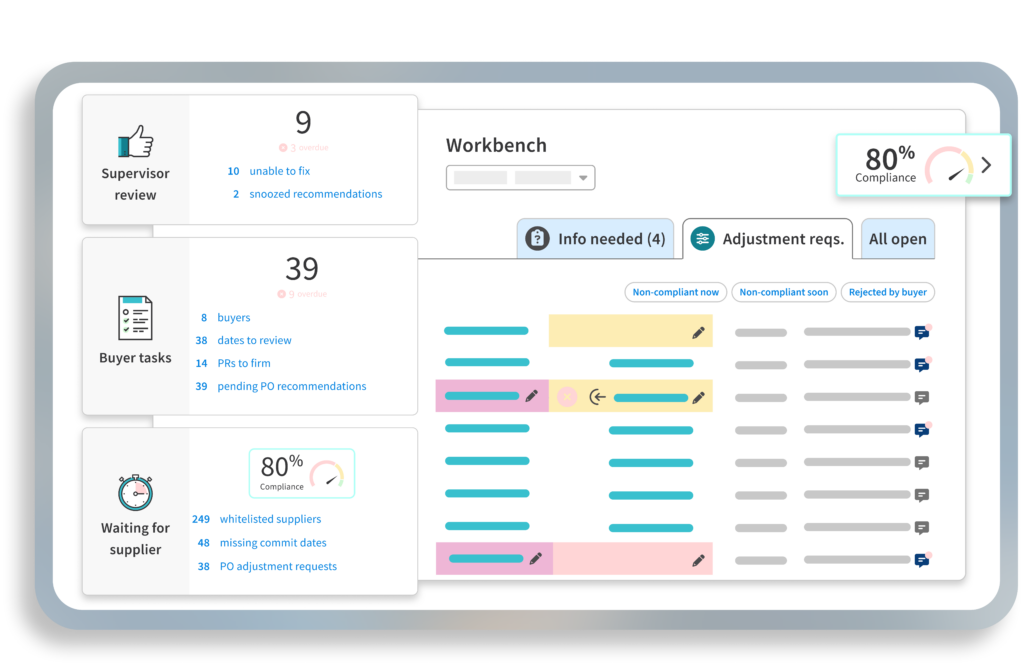
Supplier collaboration in APEX addresses the challenges of traditional supplier management by bringing buyer and supplier workflows into the same operational environment, enhancing supply chain visibility and improving operational efficiency.
At the center of the experience is the Supplier Workbench, accessed by suppliers through Supplier Connect. This collaborative approach replaces scattered emails and spreadsheets with a dedicated workspace that shows exactly what requires supplier attention. Open purchase orders needing review appear in one place, adjustment requests are organized by priority, and communication is tied directly to each order alongside relevant data.
For suppliers, this shared workspace simplifies engagement by providing visibility into demand, production schedules, and inventory management needs. Instead of sorting through inboxes to identify changes, suppliers can open the platform and immediately see what actions are required to meet business needs.
For buyers, the system structures requests through workflows rather than free-form emails, including all necessary context such as purchase order details, quantities, current dates, and recommended changes. Suppliers can accept, reject, or suggest alternatives efficiently, supporting continuous improvement initiatives and reducing supply chain disruptions.
Most transactions occur seamlessly without the need for additional messages, enabling improved supplier relationships and stronger supplier collaboration that drives efficiency.
Start with the suppliers that drive the most impact
One of the most common questions companies ask when implementing effective supplier collaboration in APEX is: Do we need to onboard every supplier at once?
In practice, the answer is no.
Most manufacturers begin by focusing on the key suppliers that have the biggest impact on their operations and the overall value chain. Often, a relatively small portion of suppliers represents the majority of their purchasing activity and production capabilities. Customers frequently follow an 80–20 approach, onboarding the suppliers that account for the largest share of their on-order value or business goals first.
APEX supports this approach through Supplier Connect, a supplier portal which allows companies to invite suppliers into the platform and give them a streamlined view of tasks that apply specifically to them.
Once those suppliers are connected, buyers can begin sending adjustment requests, sharing demand visibility, and managing communication directly through the platform, enabling better contract management and continuous improvement initiatives.
Over time, companies can continue expanding supplier participation as collaboration opportunities arise. In many cases, buyers simply add suppliers when they want to engage suppliers directly through APEX, instead of coordinating through legacy systems like email and spreadsheets.
This creates a practical path to adoption. Instead of trying to transform the entire supplier network overnight, companies focus first on the suppliers that drive the most operational impact and expand from there, allowing them to identify cost saving opportunities and assess performance through regular performance reviews.
Communication that stays connected to the work
Supplier collaboration takes more than just transactional interactions; effective communication is essential for strong supplier relationships and successful supplier relationship management (SRM) processes. Within APEX, buyers and suppliers can exchange messages directly tied to specific purchase orders, ensuring all discussions remain connected to the relevant work.
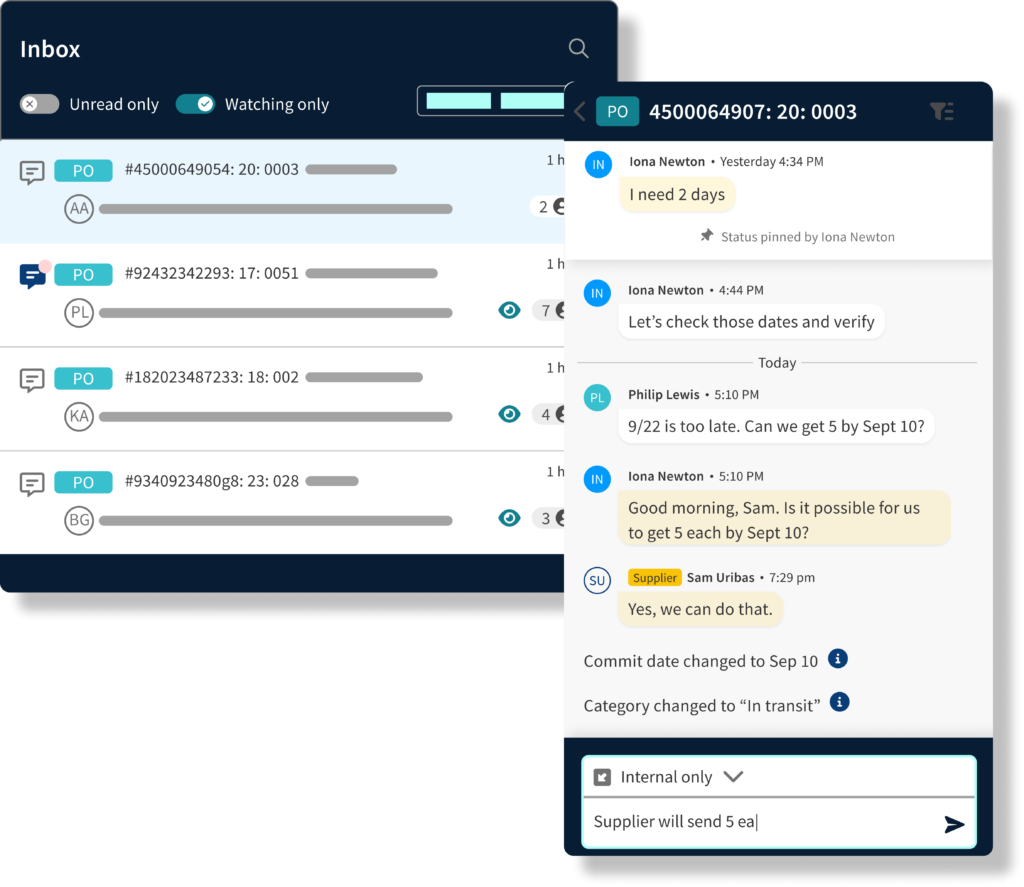
Attachments such as shipping documentation or supporting files can be shared in the same place, enhancing transparency and providing valuable insights into each transaction. This collaborative approach helps both parties stay on the same page, reducing misunderstandings and improving operational efficiency.
Instead of searching through scattered email threads to understand why a decision was made, anyone reviewing the purchase order can immediately access the discussion history. This enhanced visibility benefits production planners, supply chain managers, and other stakeholders by providing real-time access to communication without needing to be copied on every message.
Over time, this reduces one of the most common sources of operational friction: information that exists but is difficult to find. By integrating communication within the supplier collaboration platform, APEX supports continuous improvement initiatives and drives cost efficiency throughout the supply chain.
Suppliers need visibility too
Supplier collaboration is sometimes framed purely as a buyer productivity problem. In reality, suppliers benefit just as much from having better access to operational and demand information.
Suppliers need visibility into future demand fluctuations so they can plan production, allocate capacity, and improve efficiency. Without this visibility, they are forced to operate reactively, responding to changes as they happen, which can lead to quality issues and supply chain disruptions.
APEX helps close that gap by giving suppliers access to relevant planning data through reports like Line of Balance, which shows supply, demand, and projected inventory levels across future time periods. This collaborative approach strengthens supplier relationships and supports continuous improvement initiatives.
Instead of waiting for a buyer to export data and send it over, suppliers can access the information directly when they need it. That visibility helps suppliers prepare earlier, optimize their operations, and avoid surprises later, while reducing the amount of ad-hoc data requests that buyers typically receive throughout the day. In other words, suppliers spend less time asking for information and more time acting on it, contributing to mutual success in the supply chain.
From agreement to execution, without extra steps
One of the most frustrating parts of traditional buyer-supplier coordination happens after the agreement is reached in the supplier relationship management process.
The buyer and supplier confirm a change over email, but the work is not finished yet. Someone still has to update the ERP system, often repeating the same information that was already exchanged, which leads to inefficiencies and risks in the supply chain.
That step introduces delay and creates opportunities for mistakes, which could impact delivery timelines.
APEX removes much of that friction by writing information back to your ERP. Once a supplier accepts an adjustment request or confirms a new commit date in APEX, the update can flow directly into the ERP system, improving operational efficiency and reducing supply chain disruptions.
The buyer no longer has to manually recreate the change; the system handles the transaction automatically, reducing clicks and eliminating duplicate or erroneous data entry.
For organizations dealing with hundreds of daily adjustments, that efficiency gain is significant in managing supplier operations and maintaining strong supplier collaboration.
This streamlined approach supports continuous improvement initiatives and allows businesses to better monitor progress, suggest improvements, and reduce costs while strengthening collaborative relationships with key suppliers.
Measuring collaboration and supplier performance
Measuring the impact of supplier collaboration should not rely on guesswork. APEX provides both buyers and suppliers with real-time visibility into key performance metrics that reflect how well the supplier relationships are operating.
Buyers can monitor supplier performance through detailed reporting that highlights delivery reliability, responsiveness, product quality, and other operational indicators essential for effective supplier relationship management and continuous improvement initiatives.
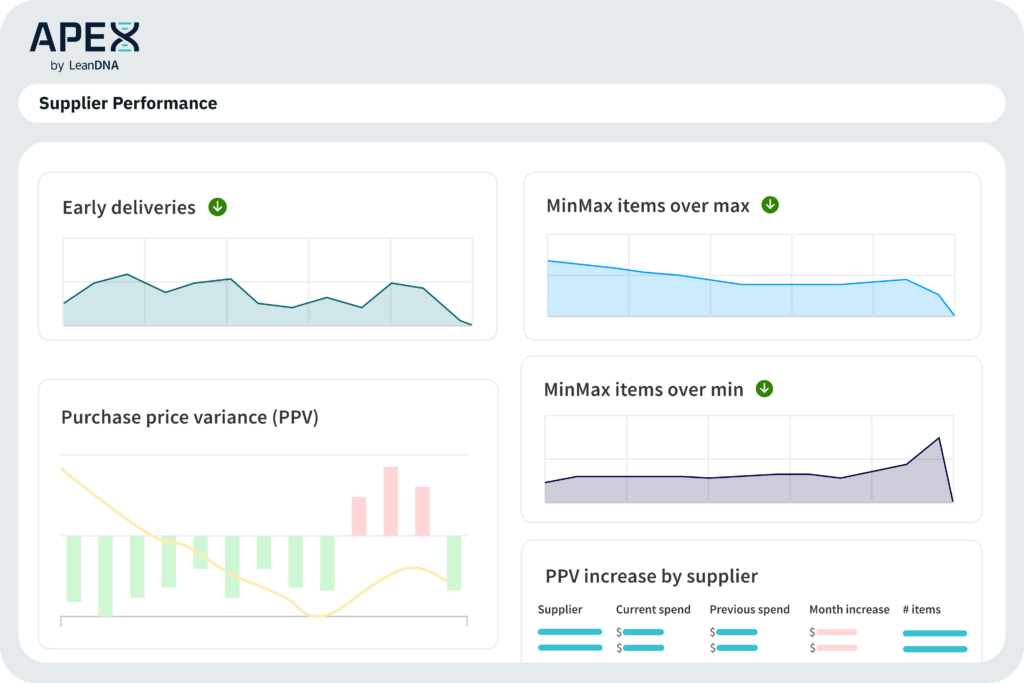
Suppliers, meanwhile, can access their own compliance metrics directly from the Supplier Workbench, fostering transparency and reinforcing accountability. This collaborative approach supports performance management by giving suppliers clear signals on how they are performing against expectations and where quality improvement may be needed.
Over time, performance data becomes an integral part of the ongoing supplier relationship management process. Teams can segment suppliers based on their responsiveness and reliability, identify cost saving opportunities, and focus on strategic partnerships that drive mutual success.
When collaboration becomes measurable through structured performance metrics and regular performance reviews, it also becomes easier to drive continuous improvement and enhance supply chain resilience.
A better way to work with suppliers
Manufacturing supply chains depend on seamless supplier collaboration to manage growing complexity and ensure supply chain resilience. The volume of coordination between buyers and suppliers continues to increase as supply networks expand and demand fluctuations become more frequent.
Trying to manage this complexity through email threads and spreadsheets leads to inefficient transactional relationships and hampers supply chain visibility and operational efficiency.
APEX transforms supplier collaboration by creating a shared operational environment where requests, communication, and execution happen together, streamlining the supplier relationship management process.
Buyers benefit from a faster, more structured way to manage purchase order changes, incorporating materials planning and production schedules into their workflows. Suppliers gain clearer visibility into demand and can respond more effectively, improving efficiency and reducing supply chain disruptions.
This collaborative approach reduces manual processes and interruptions, enhances supply chain visibility, and supports continuous improvement initiatives that drive cost reduction and improved supplier relationships.
Instead of chasing updates across disconnected systems, teams can focus on the work that actually moves the supply chain forward, gaining a competitive edge through effective supplier segmentation and strategic partnerships.